UX Architecture · Information Design · System Thinking
CLIENT
Confidential
(Simulation / Defense domain)
SCOPE
UX Architecture
Complex System Design
Information Architecture
Interaction & UI Design
FOCUS
Complex workflows · Multi-entity systems · Decision support
This project explores the design of an instructor interface for a complex training simulation system. The focus was not visual design, but structuring a complex system into a clear and scalable experience.
The system is designed for instructors managing complex training simulations. It requires coordinating multiple entities, assigning roles, and configuring detailed parameters before execution.
The core workflow includes:
– selecting a scenario
– assigning simulators
– distributing participants across units
– configuring each simulator individually
Different simulator types introduce additional complexity:
– vehicle simulators require fixed role assignments
– LED wall simulators support larger groups with individual configuration
The challenge was not defining the steps, but structuring them into a coherent and scalable interaction model.
The system requires managing multiple interconnected elements:
– different simulator types
– multiple roles per unit
– high-volume participant assignment
– layered configuration logic
Without a clear structure, this leads to cognitive overload, errors, and inefficient workflows.
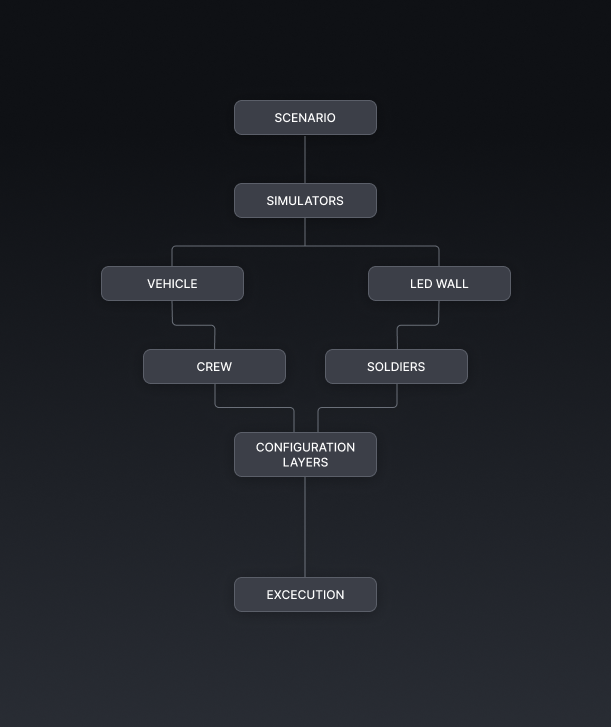
The system was approached as a network of interconnected entities rather than isolated screens.
– Separation of simulator types enables scalable configuration
– Role-based structure introduces dependencies and validation logic
– High-volume assignment requires efficient interaction patterns
– Layered configuration separates system and individual parameters
– All decisions converge into a validated execution state
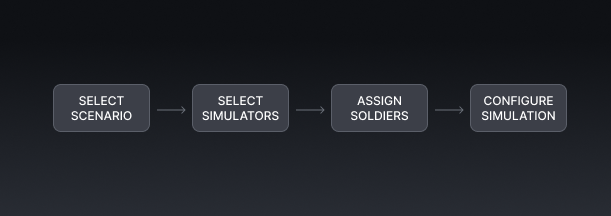
The experience was structured as a guided, step-based flow to reduce cognitive load and make dependencies explicit.
– Each step focuses on a single decision layer
– Users are guided through a clear sequence
– Dependencies between steps are enforced progressively
– The system prevents incomplete configurations before execution
The following screens demonstrate how the system structure translates into interface behavior and interaction logic.
Inline interactions allow users to search, select, and add participants without leaving the current context. This reduces friction and supports uninterrupted workflow execution.
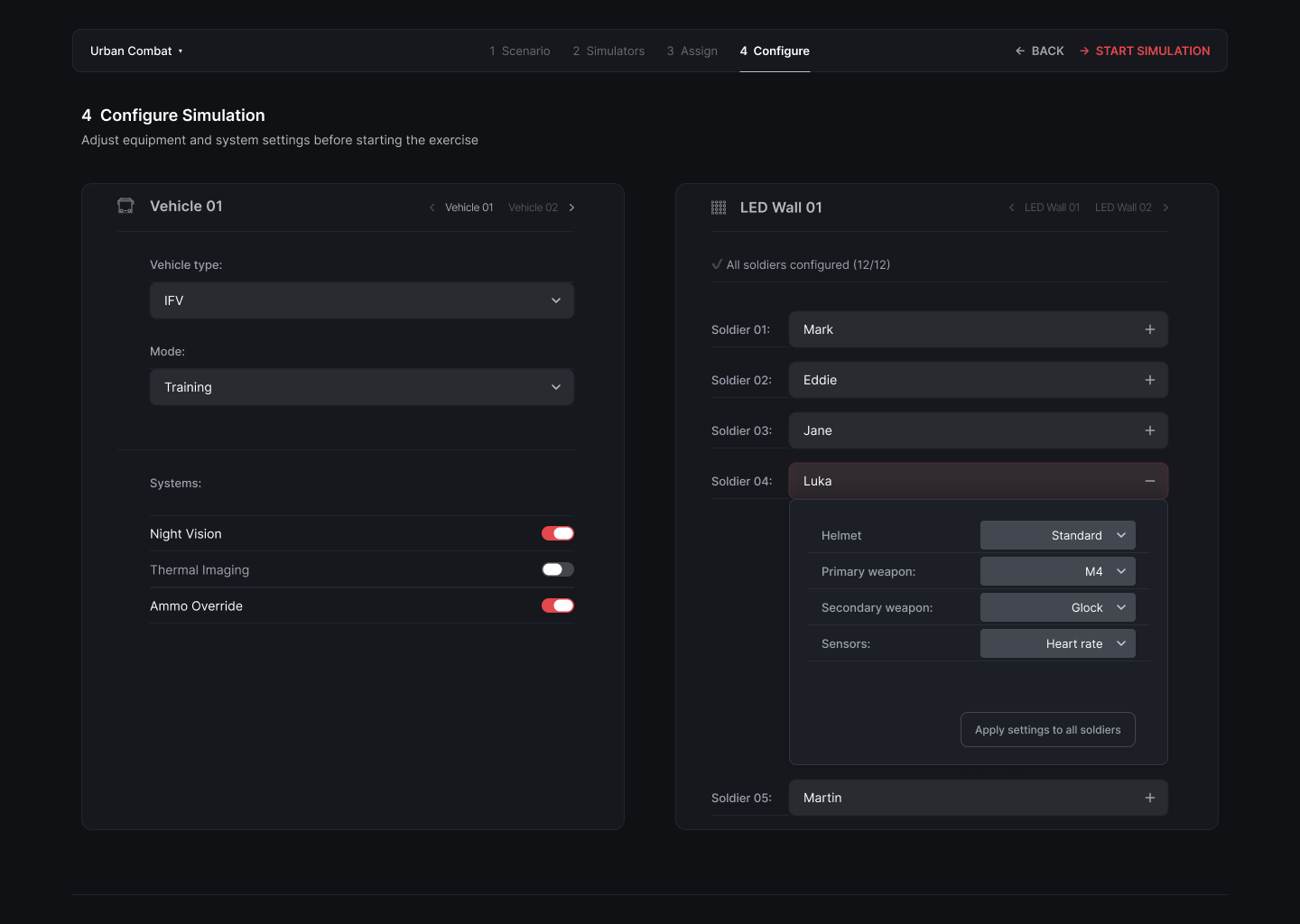
Configuration is structured into layers:
– system-level settings
– individual participant parameters
This separation enables flexibility while maintaining clarity.
The result is a structured and scalable UX architecture that transforms a complex system into a clear, guided workflow. The interface supports faster decision-making, reduces errors, and creates a foundation for future system growth. The result is not just a usable interface, but a structured system that enables reliable execution in complex environments.
This project reinforced the importance of structuring systems before designing interfaces.
In complex environments, clarity emerges from architecture — not visual design alone.