UX Architecture · Information Architecture · Multi-audience Platform
A national lifelong learning platform – built from scratch to serve individuals, providers and institutions within a single structured system.
Overview
Client
Andragoški center Slovenije
(Slovenian Institute for Adult Education)
Kam po znanje is a national lifelong learning platform for adult education in Slovenia. Built from scratch, the project included information architecture, UX structure, navigation systems and interface design.
The platform serves three distinct audiences – learners, education providers and institutional users. The challenge was designing a single system that works clearly for all three without increasing complexity.
Scope
UX Architecture
Information Architecture
Navigation Design
Content Structure
Interface Design
Role
Sole designer – concept to delivery
Focus
Multi-audience flows
Content hierarchy
Scalable navigation logic
Information architecture
The platform was structured around three distinct user flows – information seeking, content input and knowledge reference – each with different entry points, goals and content types.
Rather than building separate sections for each audience, the architecture was designed as a unified system with shared components and divergent pathways. This allowed the platform to scale without structural redesign as content and user types grew.
Navigation logic
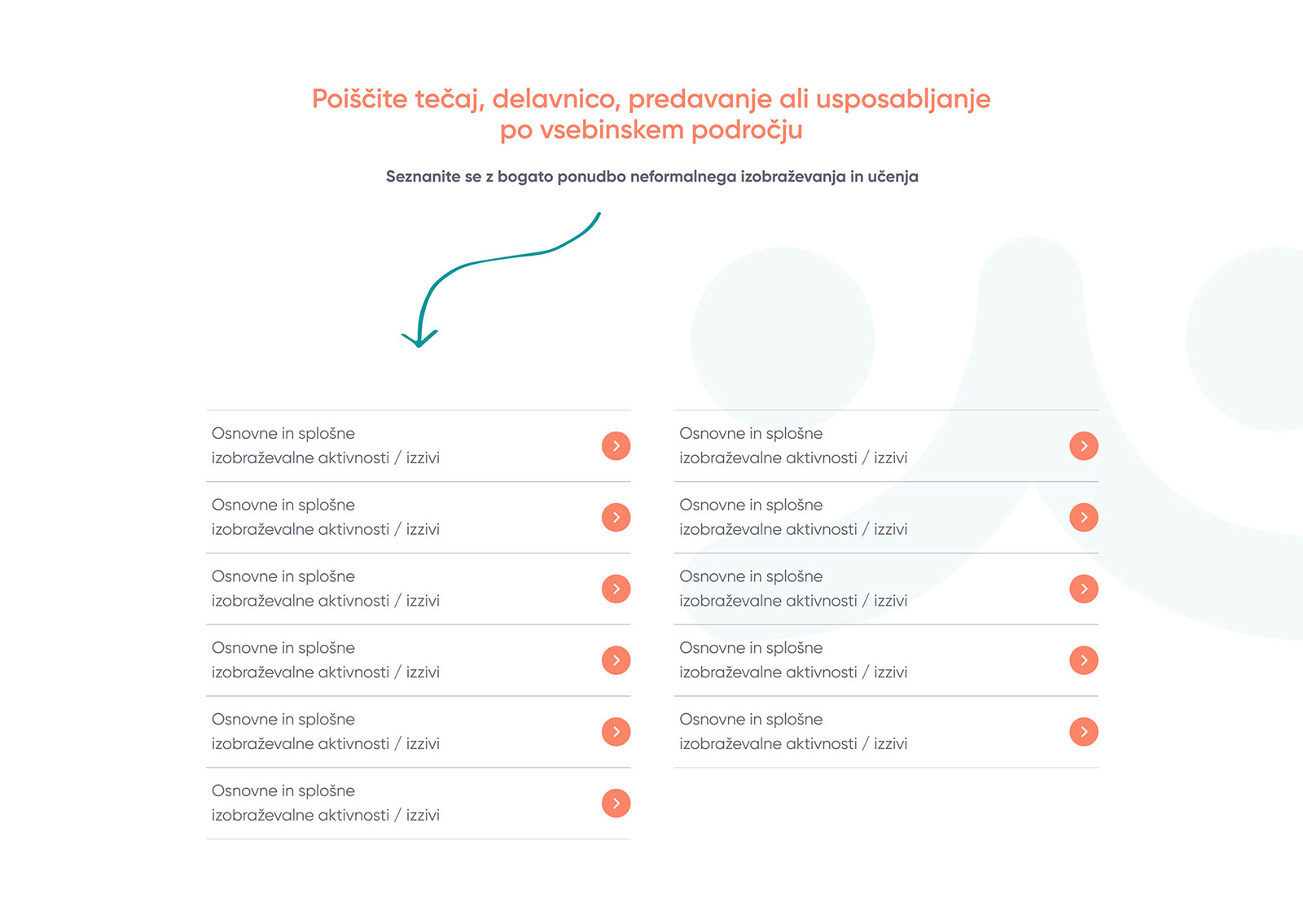
Navigation was designed to reduce friction for users who arrive with different levels of digital literacy and different goals. Category structures, filters and search were aligned to support discovery across a large and growing content base.
I designed separate provider and learner journeys so content management workflows remained invisible to end users, keeping navigation simple despite the platform’s complexity.
Content system
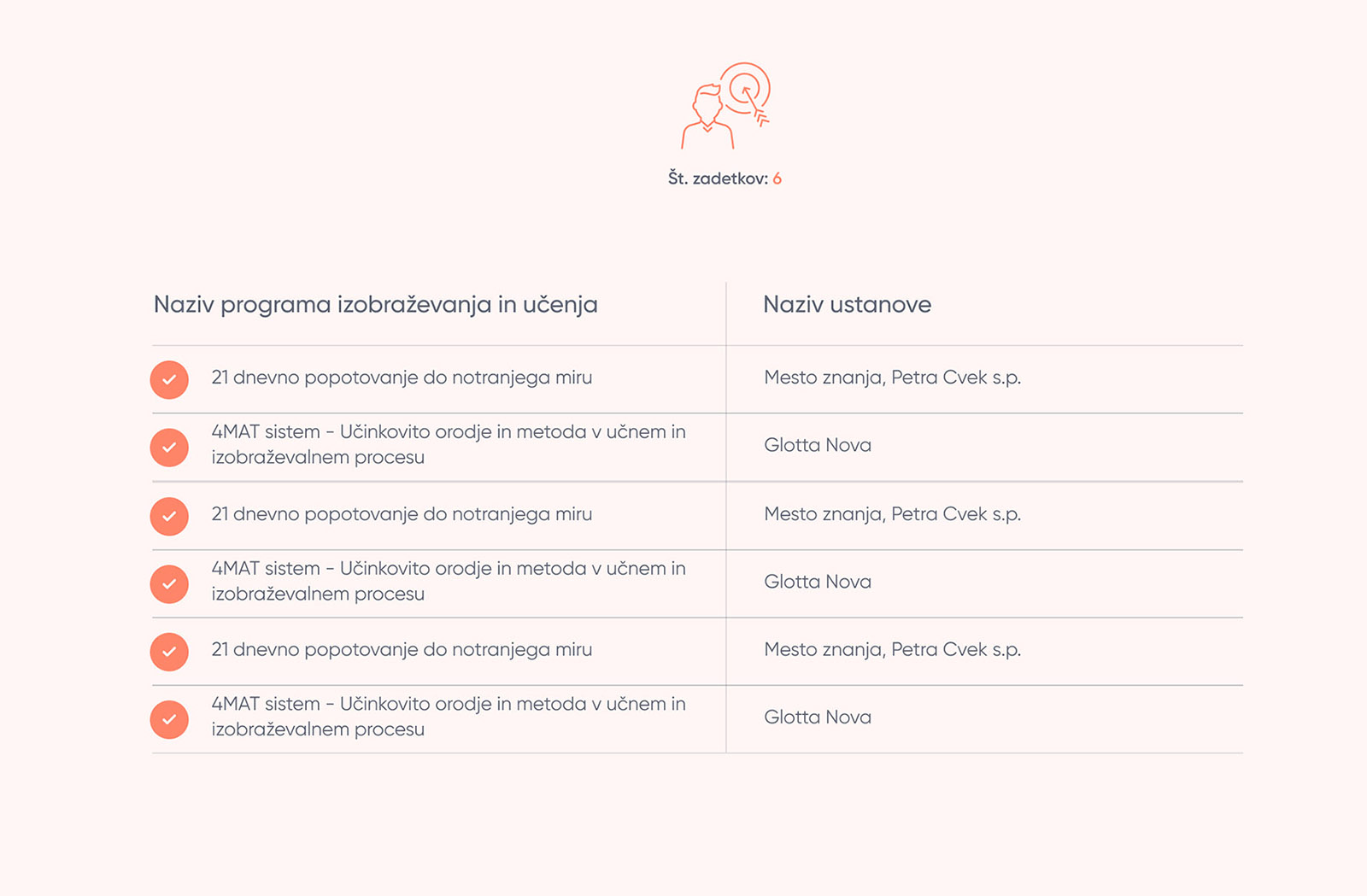
Content was organised into modular layers – programme listings, institutional profiles, editorial content and professional resources – each governed by consistent data structures and display logic.
The system was designed for long-term maintainability: providers can publish and manage their own content within a defined structural framework, without requiring designer intervention for each update.
Multi-audience design
Designing for multiple audiences within a single system required explicit decisions about hierarchy, labelling and wayfinding at every level. Each user type needed to feel that the platform was built for them – without seeing the complexity behind the structure.
Interaction patterns were simplified to support users with varying digital literacy levels, while institutional and provider interfaces maintained the depth required for professional use.
System outcomes
Building Kam po znanje from scratch required a scalable structure capable of serving learners, providers and institutions within a single ecosystem.
– Clear segmentation of user journeys
– Structured and consistent data architecture
– Simplified provider publishing logic
– Scalable modular content framework
– Improved clarity across institutional and public layers
The result is a sustainable digital platform built around structure, not content volume.