UX Architecture · Information Design · System Thinking
Client
Confidential
Simulation / Defense domain
The project restructured a complex simulation environment into a scalable UX architecture, guiding users through configuration, assignment and execution with clear decision-based workflows.
Scope
UX Architecture
Information Architecture
Interaction & UI Design
System Design
Focus
Complex workflows
Role-based systems
Decision support
The core workflow required coordinating multiple entities and configuration layers:
– selecting a scenario
– assigning simulators
– distributing participants across units
– configuring each simulator individually
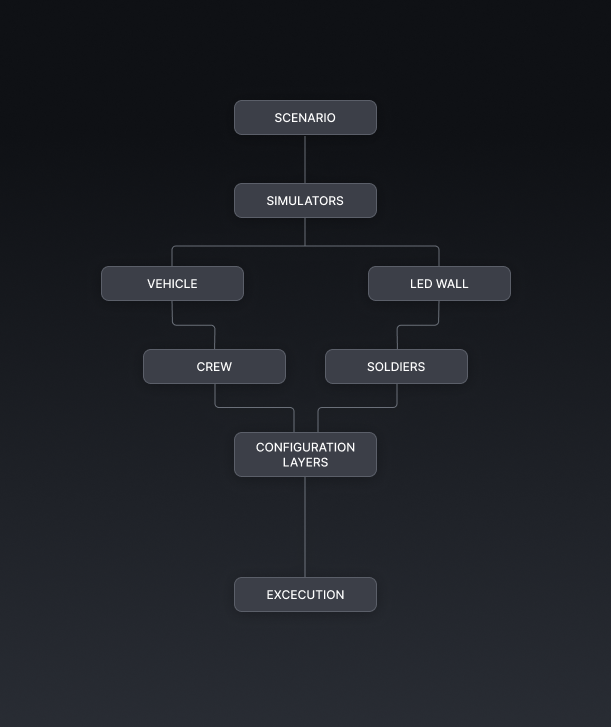
The system was designed as interconnected entities rather than isolated screens.
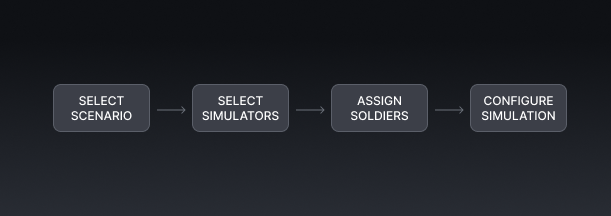
A guided step-based workflow reduces cognitive load and makes dependencies explicit.
– Each step focuses on a single decision layer
– Incomplete configurations are prevented progressively
Once the system structure is defined, the interface shifts into role-based assignment workflows.
Users can search, assign, and create participants without leaving the current workflow.
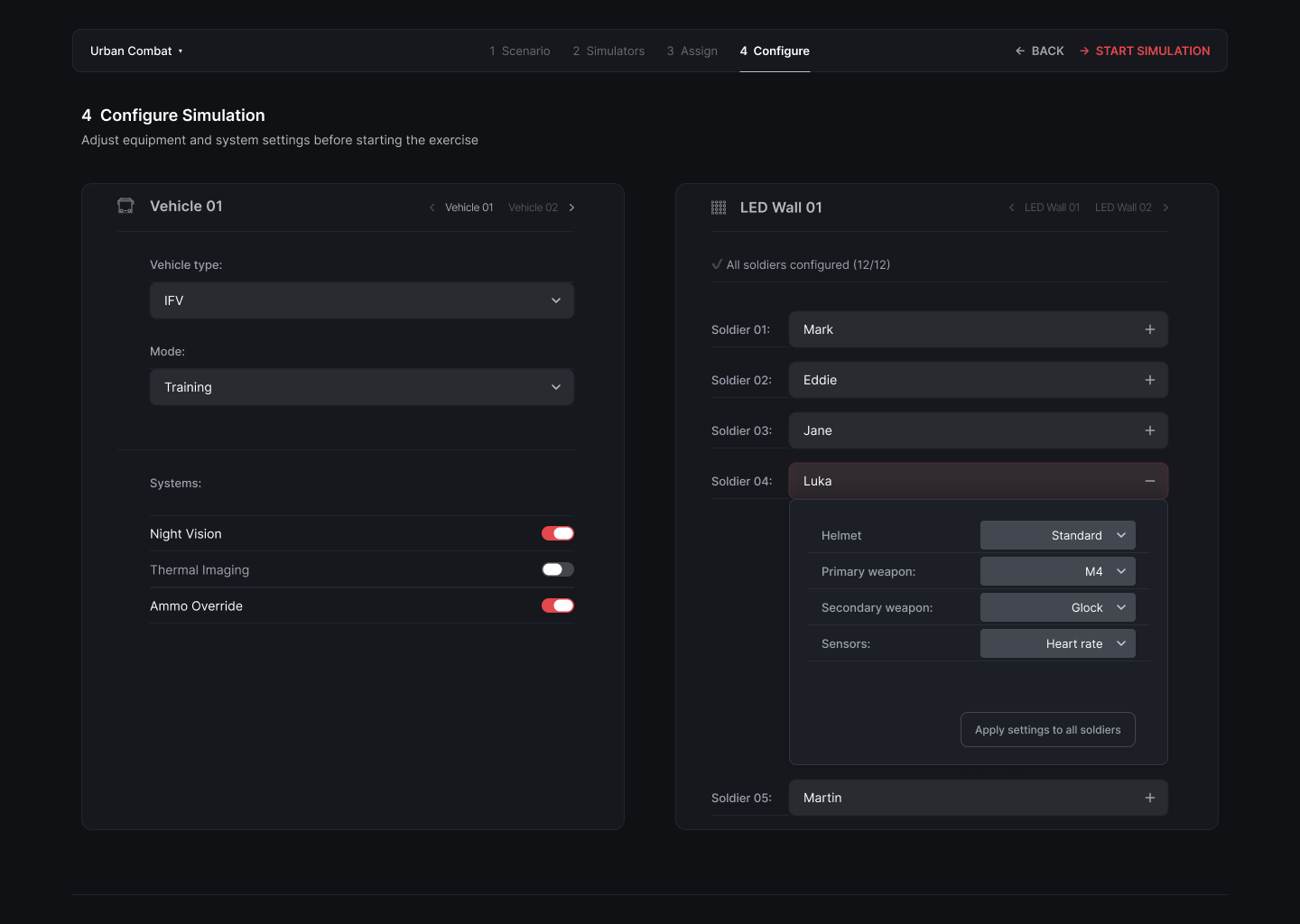
Configuration is structured into layers:
– system-level settings
– individual participant parameters
The result is a scalable UX architecture that simplifies complex simulation workflows through guided interaction, structured configuration and role-based decision making.
In complex systems, clarity emerges from structure — not from interface styling alone.